
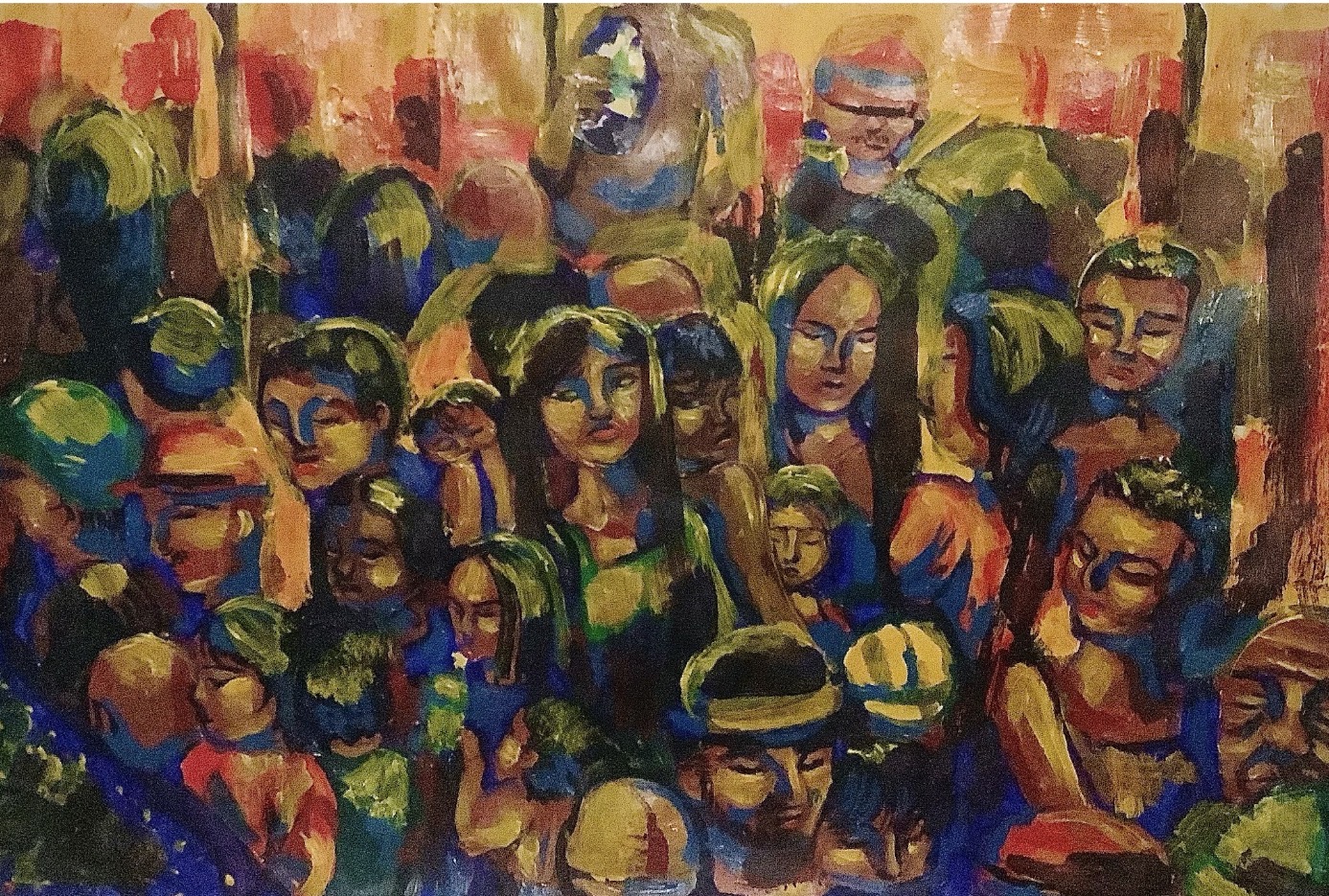
We love tidy lines. Inheritance, we assume, flows downhill: blue eyes, a talent for Bach, the family nose. But art refuses to follow the blood’s gentle slope. It behaves less like a gene and more like a boomerang. Thrown forward, it vanishes for a generation, only to circle back and strike the descendant who least expects it.
Consider the grandfather who painted in secret, his canvases stacked in a dusty attic, never discussed at dinner. His daughter becomes a pragmatic accountant. She has no use for turpentine or metaphor. Then her son, a quiet watchful boy, picks up a charcoal stick at twelve and draws hands with an accuracy that stops time. He has never seen his grandfather’s work. And yet the same line quality, the same obsession with knuckles and light, re emerges forty years later.
This is the great skip. Art does not care for direct descent. It leaps over the willing but untalented child and lands on the resistant grandchild, or the great niece who lives three counties away. Why? Because art is not a skill. It is a wound and a remedy passed sideways. It hides in family silence, surviving on neglect. The accountant mother suppressed her father’s palette not from cruelty but from self preservation. She saw how art made him lonely. Her son, however, inherits no memory of that loneliness, only the raw gift, unencumbered by trauma.
Neurology hints at this: epigenetic markers can carry heightened perceptual sensitivity without carrying the practice. But the real genius of art’s skip is psychological. The skipped generation provides the distance needed for the gift to breathe. A child raised without pressure, without the weight of “continuing the legacy”, is free to play. And play is where true art begins.
So if your father’s watercolours bore you, and your own child prefers spreadsheets to sketches, do not despair. Wait. Watch your grandchild’s left hand as it drifts towards the edge of a napkin. The ghost on the easel is patient. It knows exactly whose sleep it will disturb, two generations from now.

