
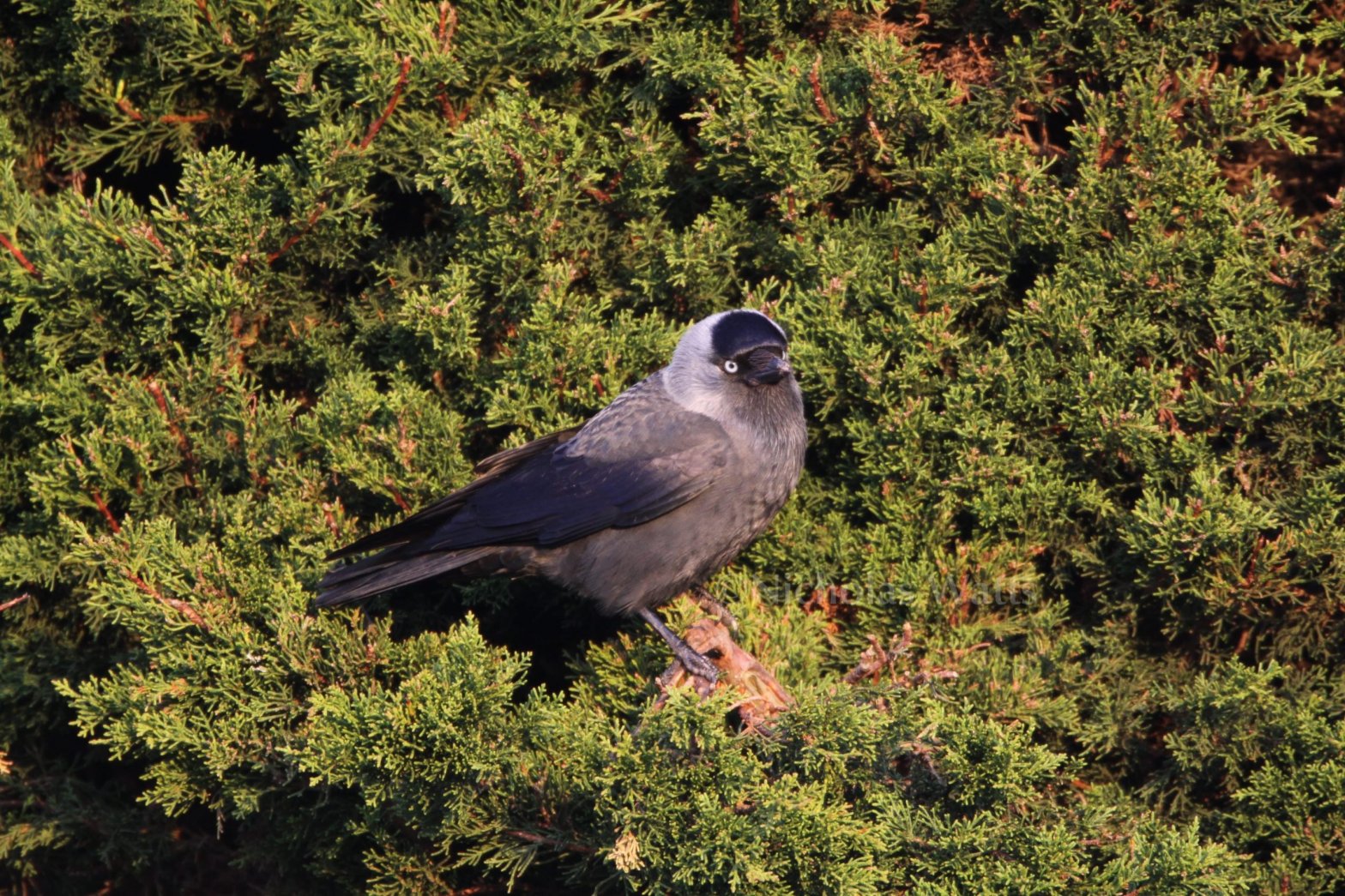
To witness a jackdaw is to see a mind at work. This bird, sleek and sharp-eyed in its grey-black cowl, is more than just a corvid; it is a feathered philosopher of the English countryside, and its behaviour is a masterclass in sophisticated living.
Its greatest genius lies in society. Jackdaws mate for life, a profound commitment in the animal kingdom. You see them not as a flock, but as a community. They converse constantly in their distinctive, chuckling ‘chack’ call—a complex language we are only beginning to understand. They play games in the wind, dropping twigs and catching them mid-air, for the sheer joy of it. This is not mere instinct; it is culture.
They teach us about resilience and intelligence. They are tool-users and problem-solvers, capable of recognising individual human faces. Their nests in ancient chimneys and hollow trees are testaments to adaptability, making a home wherever opportunity arises.
But the most powerful lesson is in their unity. When a jackdaw is sick or injured, the group will often feed and protect it. They understand that a chain is only as strong as its weakest link.
So, next time you see a pair of them, heads cocked, observing the world from a church spire, look closer. They are not just birds. They are reminders of the power of loyalty, the importance of play, and the unbreakable strength that comes from looking after your own. In their clever, social world, the jackdaw holds a quiet mirror to our own best selves.
 © Dominic Wightman Personal Bio Site 2025